
Market Cross
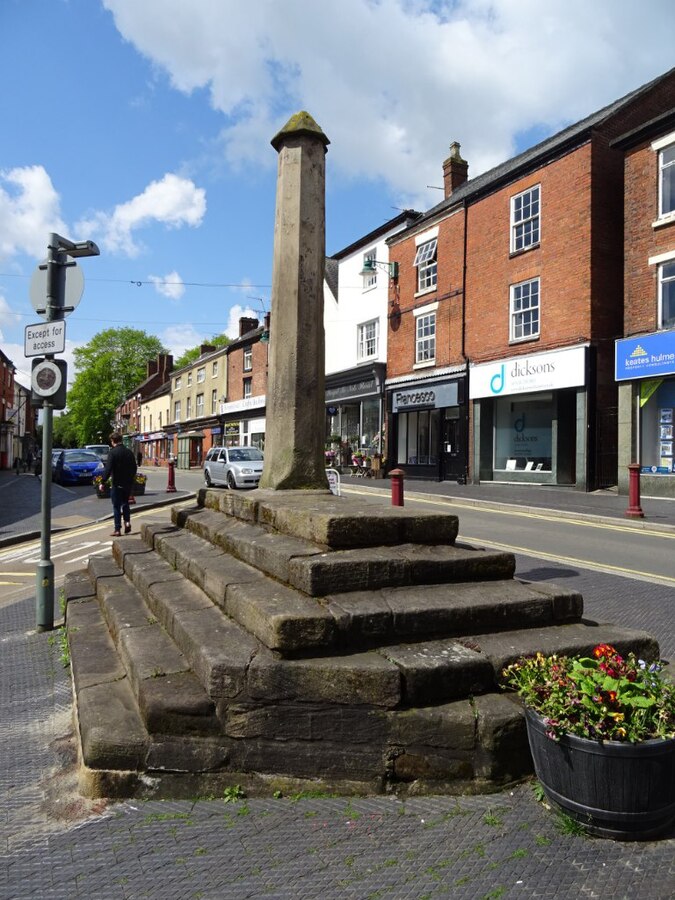
Cheadle’s Market Cross, often referred to locally as the Butter Cross, is one of the town’s oldest surviving landmarks. Dating back to the 17th century, it stands at the junction of High Street and Cross Street, marking the historic heart of Cheadle’s market activity. The structure is built from sandstone and features a stepped plinth with six broad stone steps, a chamfered octagonal shaft, and a simple pyramidal cap. Its name—Butter Cross—reflects its original function: a gathering place for local farmers and traders, particularly those selling dairy produce such as butter and cheese.
The cross is officially listed as a Grade II structure by Historic England, recognising its historical and architectural importance. It served as a central point for Cheadle’s market, which was granted a royal charter by Henry III in 1250, helping the town grow from a small rural hamlet into a busy market town. In medieval times, market crosses like this one often stood at the centre of trade and town life, acting as both a practical fixture and a civic symbol. Old photographs and postcards from the late 19th and early 20th centuries show the cross in everyday use, often with the towering spire of St Giles’ Church rising in the background.
Though its commercial function has long since faded, the Market Cross remains an important emblem of Cheadle’s heritage. It connects modern residents and visitors to centuries of local tradition and trade, offering a physical reminder of the town’s evolution through time. Still standing proudly at the centre of town, the Butter Cross is not just a relic of the past—it’s a cherished part of Cheadle’s identity, quietly watching over the place where townsfolk have gathered for generations.